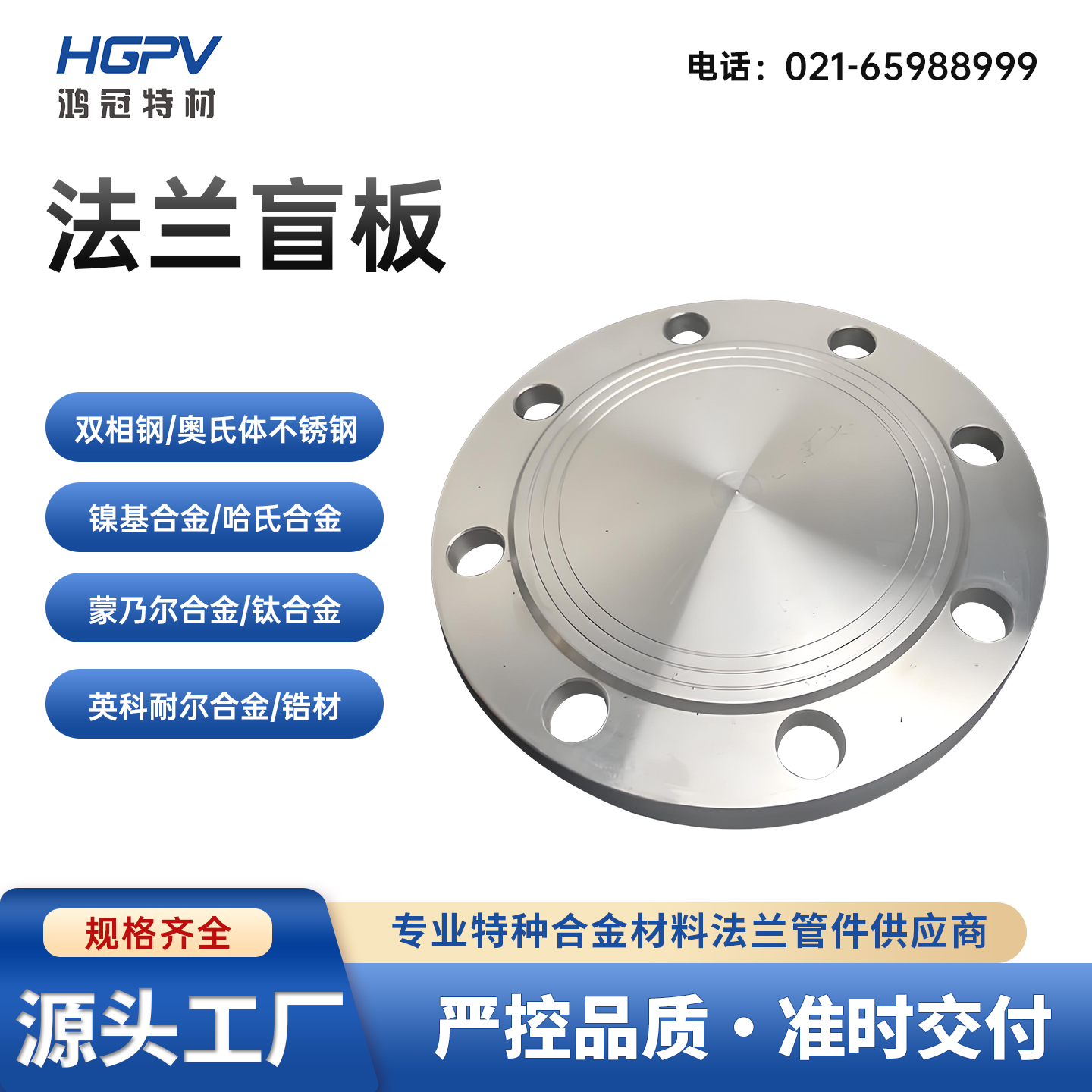
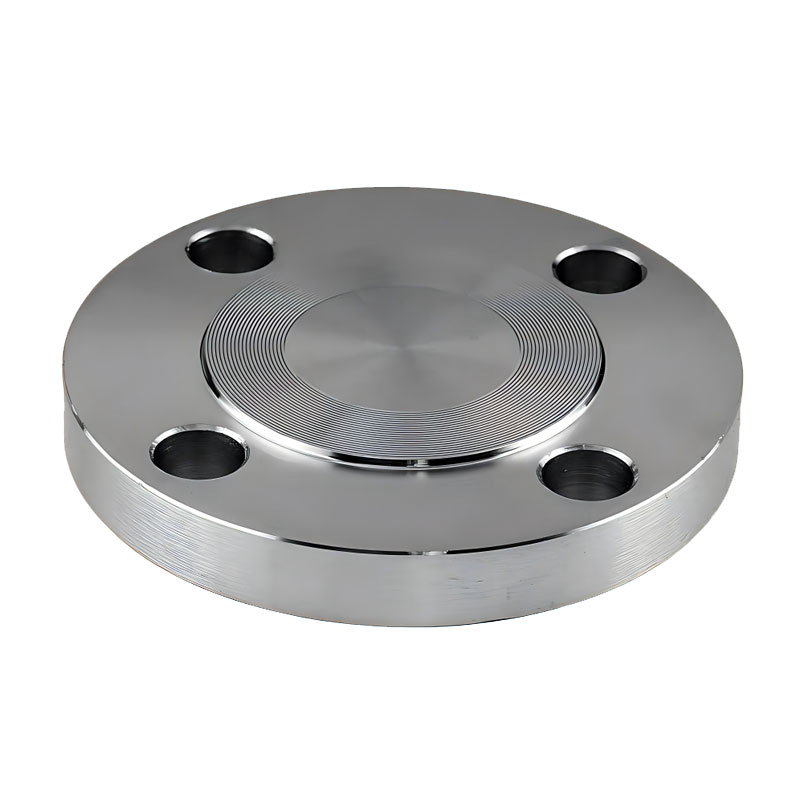
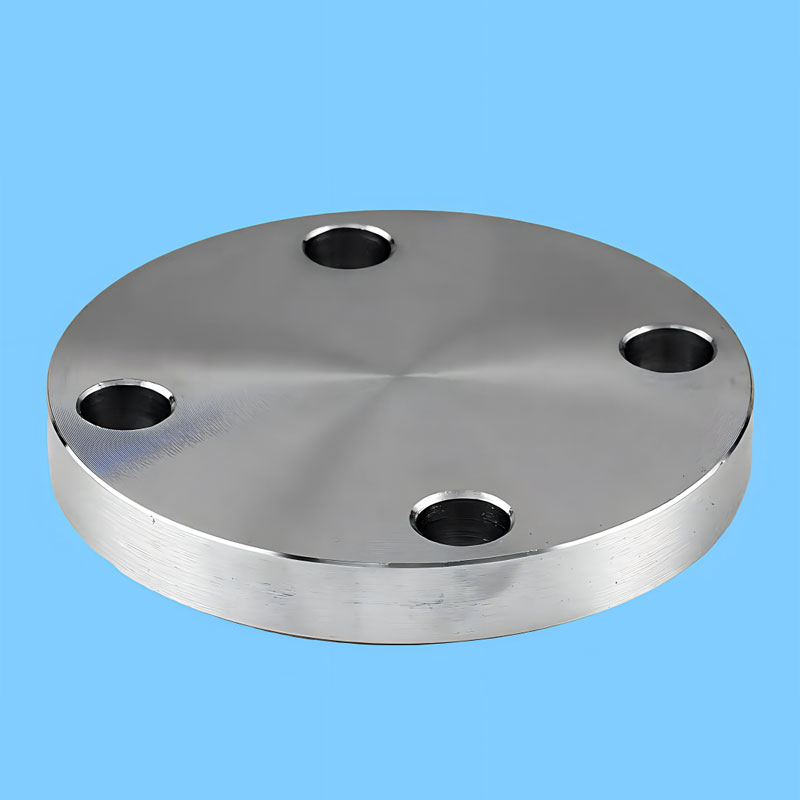
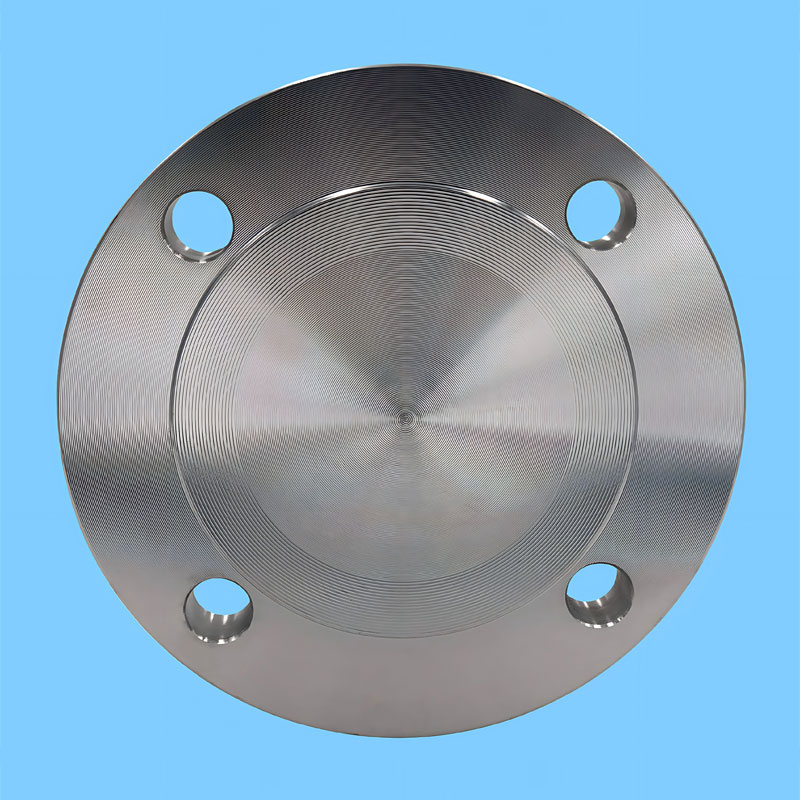
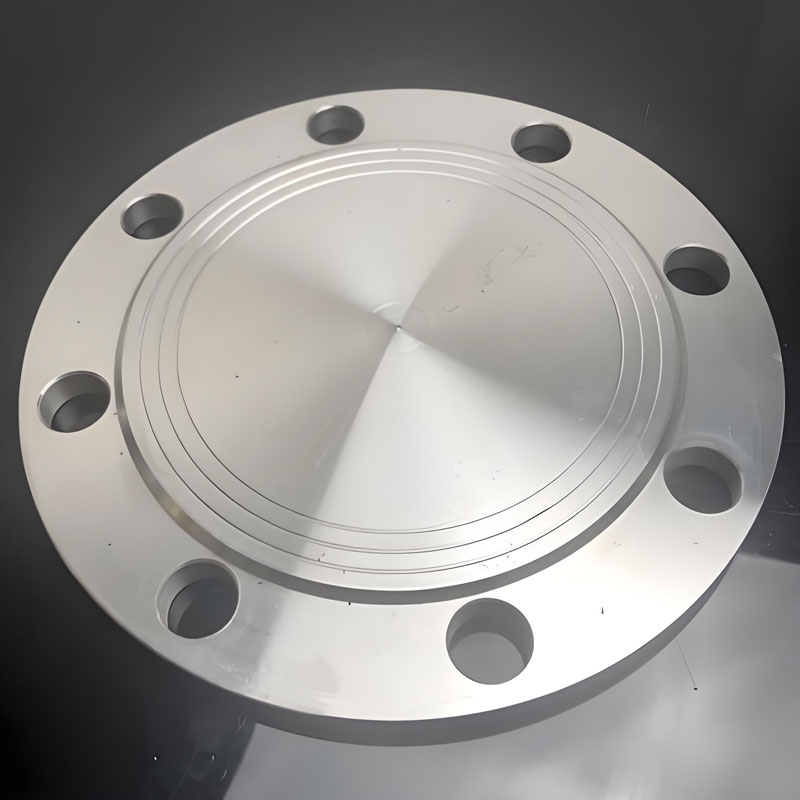
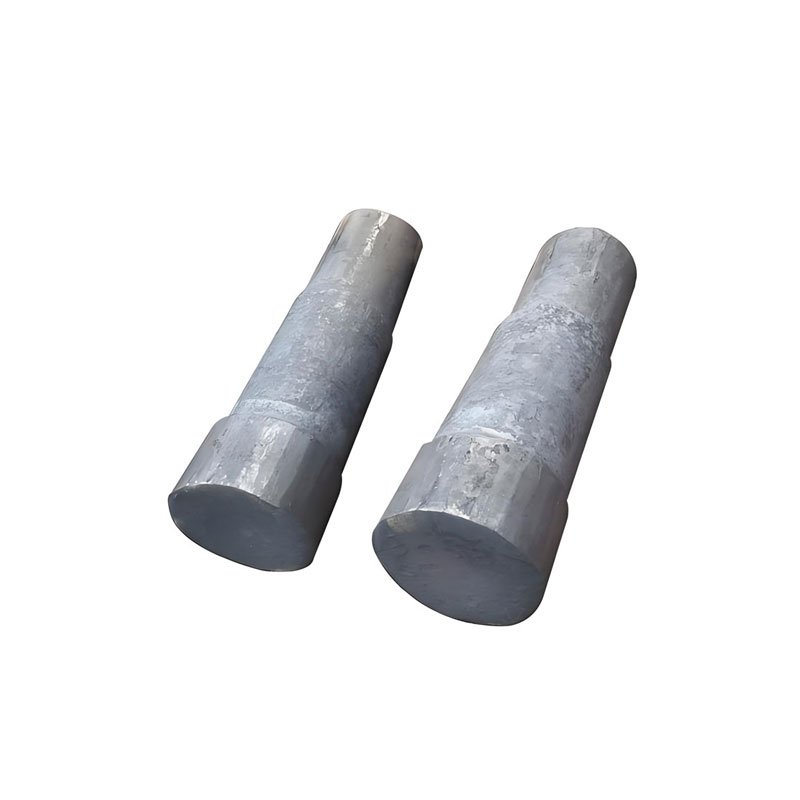
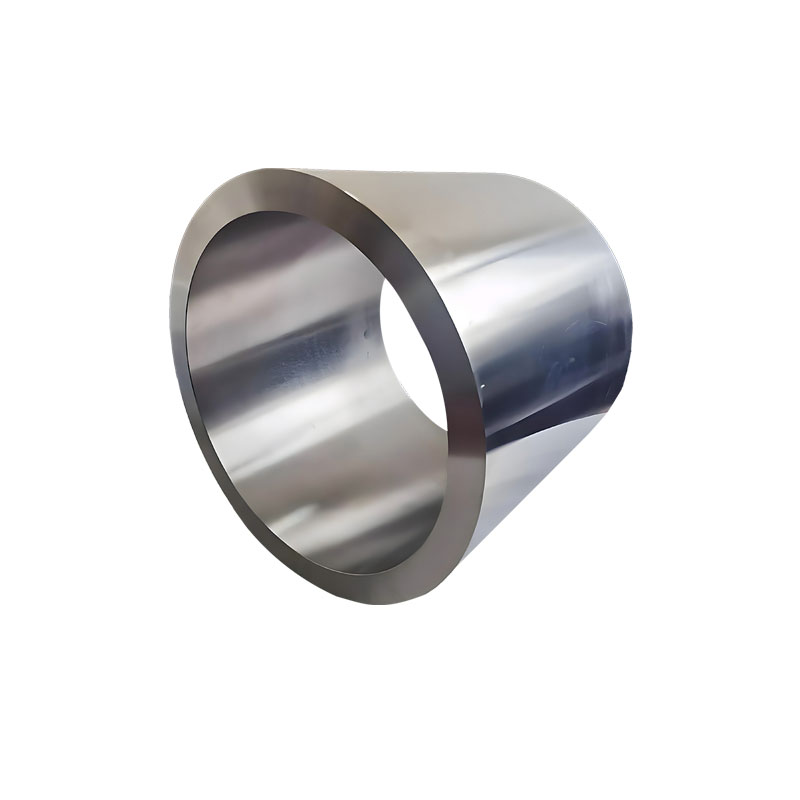
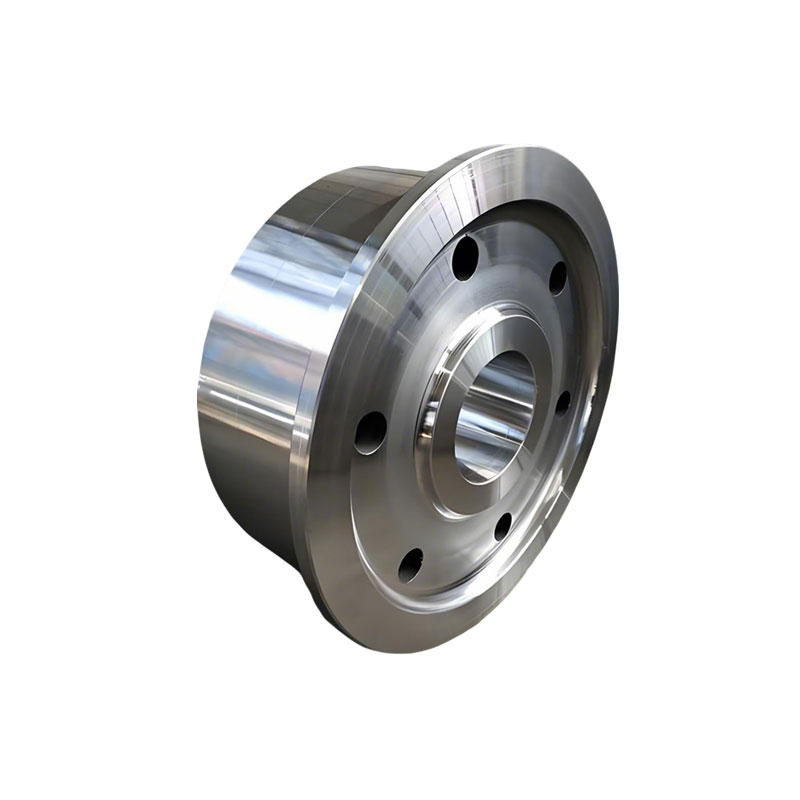
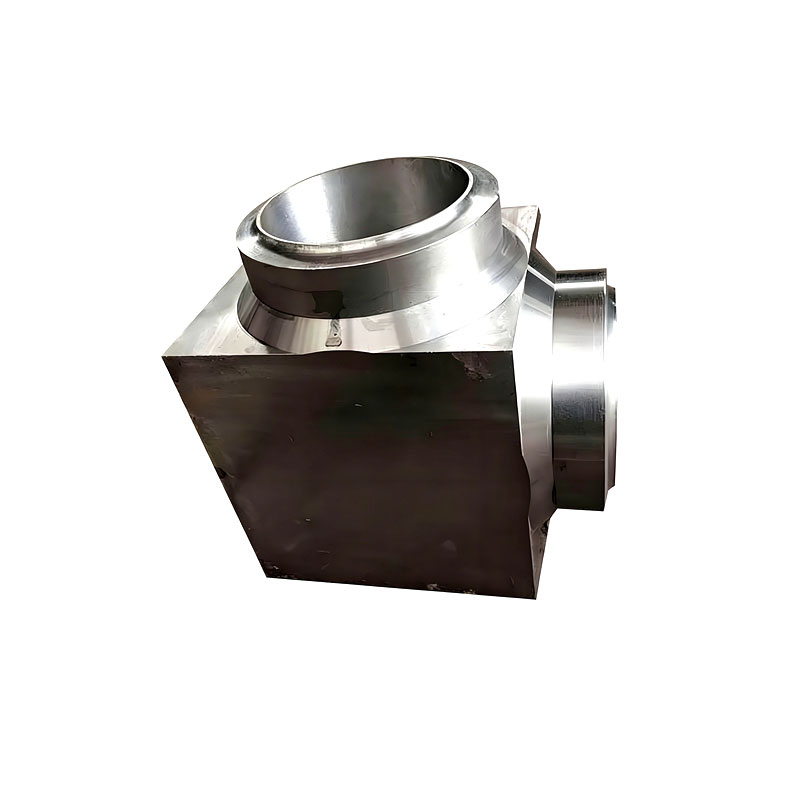
Simple structure: It is in the shape of a solid disk, without a central through-hole, and is sealed by fastening with bolts and matching flanges.
Detachability: Compared to heads or caps, blind plates can be quickly opened by removing bolts, making it easier for system maintenance, cleaning, or subsequent expansion.
High sealing performance: When used in conjunction with gaskets, it can effectively block the flow of media, prevent leakage, and ensure operational safety.
Diversified types: including ordinary blind plates, 8-shaped blind plates (for easy switching between on and off states), quick opening blind plates (for frequent operation scenarios), etc.
Main material
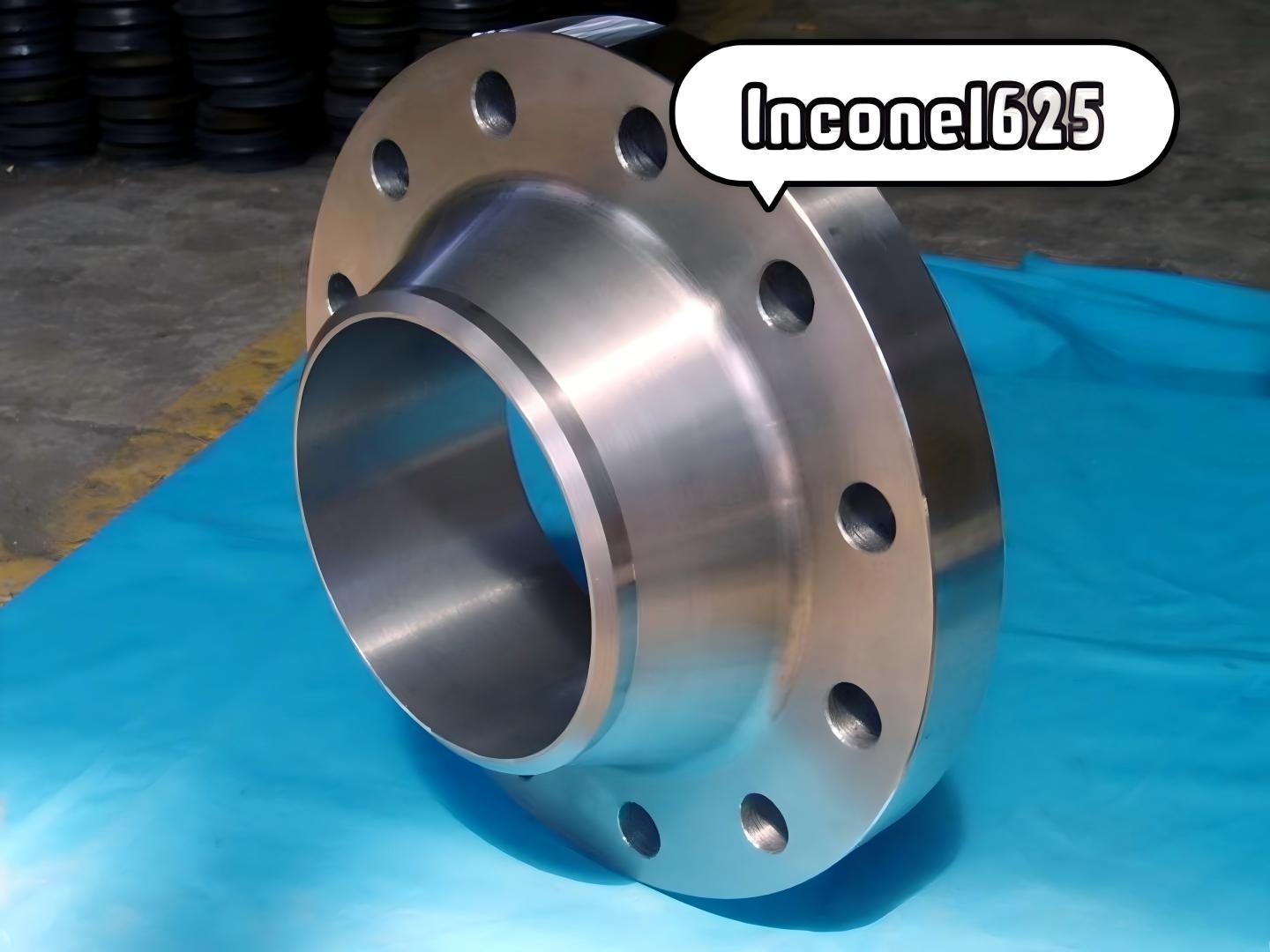
materialmainIncluding austenitestainless steel、Dual phase steel, titanium alloyHastelloy, Monel, Inconel, and customized special metals.
sealing formThe main types are as follows
Flat Face (FF): The sealing surface is flush with the outer edge of the flange and is suitable for low-pressure, non hazardous medium systems. It is often paired with cast iron flanges.
RF (Raised Face): The sealing surface is slightly higher than the flange surface, increasing the clamping force of the gasket. It is suitable for medium pressure applications and is the most common type.
Male Female Face (MFM): Paired with two flanges, one convex and one concave, it effectively prevents the gasket from being squeezed out and is suitable for high pressure and leak prone media.
TG (Tongue and Groove): With a more complex structure and excellent sealing performance, it is suitable for systems with flammable, explosive, toxic, or high-pressure media.
Ring Joint (RJ): Metal ring pads are used to achieve line contact sealing, suitable for high temperature and high pressure conditions, such as long-distance oil and gas pipelines.
execution standard
The design and manufacturing of flange blind plates follow multiple international and industry standards to ensure interchangeability and safety:
national standard:
GB/T 9123-2010 "Steel Pipe Flanges": a general standard in China that specifies the dimensions and technical requirements for PN series blind plates with nominal pressure.
Chemical industry standards:
HG20592-2009/HG20615-2009/HG20601-97: Widely used in chemical plants, covering American Class series and national PN series.
Mechanical industry standards:
JB/T 86.1-94/JB/T 86.2-94: Suitable for medium and low pressure industrial pipelines.
International standards:
ASME B16.5/ASME B16.47: American standard system, applicable to high voltage systems from Class 150 to Class 2500.
EN 1092-1 (PN): European standard applicable to pressure ratings from PN6 to PN400.
Size specifications and pressure rating
Nominal diameter (DN): Common specifications range from DN10 to DN600, and the thickness increases with the pressure level. Under high pressure, the thickness can reach 2-3 times that of low pressure to ensure pressure bearing capacity.
Common pressure levels include: National Standards (GB): PN6, PN10, PN16, PN25, PN40, etc., with units in MPa.
American Standard (ASME): Commonly used Class 150, 300, 600, 900, 1500, 2500, corresponding to the maximum allowable working pressure at different temperatures.
Japanese Standard (JIS): such as 5K, 10K, 16K, 20K, with 10K ≈ 1.0 MPa.