

-
 Back to top
 -
 021-65988999
 -
 QR code



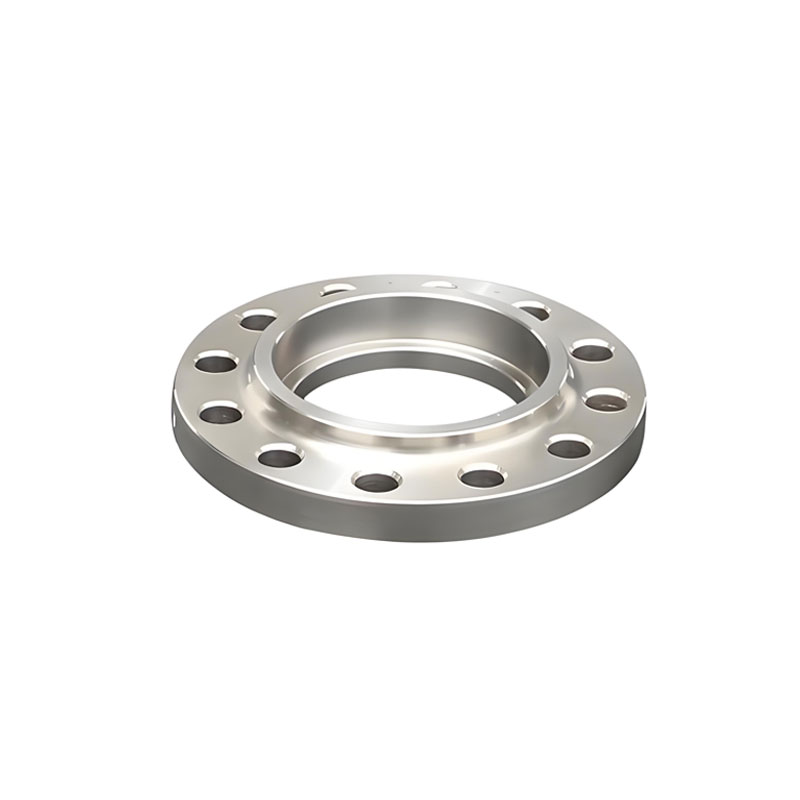
304 stainless steel flange is one of the most widely used pipeline fittings in various industrial fields. They are used to connect pipelines, valves, pumps, and equipment, and can reliably complete this task under different pressure and temperature conditions. This material belongs to the austenitic grade, and compared to higher grade alloys, it has good corrosion resistance, considerable tensile strength, and moderate cost. This combination of features makes it suitable for various specific scenarios, from basic pipeline engineering to critical process pipelines in chemical plants. This article will introduce the practical application areas of 304 stainless steel flanges, the reasons for adaptation in various fields, and several limitations that need to be understood before selection.
What is a 304 stainless steel flange?
304 stainless steel flange is a disc-shaped pipe fitting made of 304 grade stainless steel, which contains approximately 18% chromium and 8% nickel alloy. They are connected to the end of the pipeline or the mouth of the equipment, forming a joint that can be opened for maintenance. This type of flange includes sliding sleeve type, butt welding type, blind plate type, socket welding type, and threaded type, and has different pressure levels and size specifications. Chromium will form a passive oxide film on its surface, which can prevent rust and resist mild chemical corrosion. This is also the reason why 304 stainless steel flanges are widely used in systems such as food, pharmaceutical, chemical, and water treatment that require basic hygiene or corrosion resistance.
The main applications of stainless steel 304 flanges
The application fields of 304 stainless steel flanges cover multiple industries. The following are the main designated areas of use for these flanges and their respective reasons for selection.
Pipeline connection and fluid transportation system
In almost all process factories, 304 stainless steel flanges are used for pipeline joints, equipment inlets, pump body connections, and valve ends. They ensure that the system can be turned on at any position for cleaning, inspection, or component replacement. For fluid pipelines transporting water, mild chemicals, or process liquids, 304 stainless steel has good performance and will not corrode the medium or pipe wall being transported. After correctly installing the gasket, the flange joint can withstand pressure without leakage, which is crucial in any continuous flow system.
Pressure treatment and leak prevention system
304 stainless steel flange joints are suitable for medium pressure conditions and can be used in compressed air pipelines, low-pressure steam delivery systems, and hydraulic circuits with low fluid corrosiveness. The flange with suitable gasket material and correctly tightened bolts can withstand long-term pressure without the need for replacement. In high vibration environments, the sealing performance of flange components is better than that of threaded joints, which will gradually loosen over time.
Equipment assembly and maintenance
Flanges make equipment assembly feasible. Heat exchangers, reactors, mixers, and storage tanks are typically equipped with 304 stainless steel flange nozzles for connecting and disassembling pipelines as needed. This is crucial in factories with heavy equipment maintenance tasks. Welding joints are permanent; The flange joint can be opened within one hour. This is why engineers specify flange connections at critical operational nodes, even if the rest of the pipeline is welded.
chemical industry
Stainless steel flanges for chemical use are commonly used in dilute acid pipelines, alkali conveying systems, and general chemical process pipelines with low medium concentration or without a large amount of halides. 304 stainless steel is suitable for nitric acid, low concentration phosphoric acid, and various organic chemicals. It is not suitable for hydrochloric acid or high chloride environments, but in most general chemical conditions, using 304 stainless steel flanges does not require upgrading to 316 or duplex steel materials. Stainless steel flanges used in the chemical industry are typically manufactured according to ASTM A182 F304 specifications, ensuring consistency in their mechanical properties and composition.
Water treatment plant
The 304 stainless steel flange used in water treatment plants is applied to the raw water intake pipeline, filtration system, dosing interface, and purified water distribution main. Freshwater, filtered water, and chlorinated water at municipal standard concentrations will not cause strong corrosion to 304 stainless steel. This material does not introduce corrosion products into the water flow, thus maintaining the cleanliness of the system. However, in seawater desalination or high salinity water systems, due to the presence of chloride ions, it is more recommended to use 316 stainless steel. For conventional water treatment scenarios, 304 stainless steel flanges used in water treatment plants have good durability and cost-effectiveness.
food processing industry
Stainless steel flanges used in the food processing industry must comply with stricter surface finish requirements. Flanges in this industry are typically polished to Ra 0.8 or higher on surfaces in contact with food to prevent bacterial growth. 304 stainless steel meets food safety standards because under normal processing conditions, it does not react with food grade acids such as citric acid and acetic acid. This type of flange is used for CIP pipeline systems in dairy factories, beverage production lines, breweries, and snack food factories. This material can be repeatedly steam sterilized without spoilage, which is a practical requirement in any food processing environment.
pharmaceutical industry
Stainless steel flanges used in the pharmaceutical industry must meet higher standards than most other industries. Flanges in pharmaceutical systems are usually subjected to electrolytic polishing treatment, and their joint design must be seamless, or at least can be cleaned through in-situ cleaning/in-situ sterilization processes. 304 stainless steel is used in purified water systems, injection water delivery systems (although 316L stainless steel is more common in this scenario), and public systems such as clean steam. This material will not contaminate the product, can withstand steam sterilization, and can meet the requirements of the US Food and Drug Administration and Good Manufacturing Practice after proper handling. In this field, surface roughness, passivation treatment, and traceability of material certificates are strictly controlled.
construction industry
304 stainless steel flanges used in the construction industry are commonly found in process pipelines, HVAC systems, fire sprinkler pipelines, and utility connections. This type of flange is used in the pipeline main and machine room pipelines of high-rise buildings, commercial complexes, and industrial facilities. In environments where mild atmospheric corrosion may affect exposed or semi exposed carbon steel, 304 stainless steel can be used stably without the need for painting or special protective coatings. This material has a neat appearance and is of great significance in building or visual pipeline applications. For installation scenarios involving underground or seawater immersion, higher grade stainless steel is required, but for general construction purposes, 304 stainless steel is a practical choice.
Other industrial applications
In addition to the core industries mentioned above, 304 stainless steel flanges are also used in oil and gas (non acidic conditions), pulp and paper mills, breweries, swimming pool water systems, marine freshwater systems, and HVAC condensate water pipelines. In automobile manufacturing plants, they are used for the transportation and distribution of coolant and compressed air. Suitable for instrument pipe joints and low-pressure service pipelines in power plants. In the field of shipbuilding, it is used for freshwater cooling circuits and general utility pipelines that do not directly contact seawater.
Why are 304 stainless steel flanges favored in various industries
The core answer lies in the balance between cost and performance. 304 stainless steel is one of the more affordable stainless steel grades, with good corrosion resistance, excellent welding performance, and almost all flange types and specifications available. In most application scenarios, it does not require special post weld heat treatment. Manufacturers are very familiar with it, and gaskets, bolts, and fittings compatible with 304 stainless steel are also easy to procure.
It also has corrosion resistance in most indoor and outdoor environments, which makes it more likely to be applied in the future. In addition, it does not exhibit magnetism in the annealed state, which is crucial in certain instrumentation and electronic applications.
From a compliance perspective, 304 stainless steel meets most food, pharmaceutical, and drinking water standards, and has good adaptability across industry standards. For factories equipped with mixed use pipelines, standardization of factory procurement and inventory management can be achieved by unifying most flange requirements to a single material grade.
Conclusion
304 stainless steel flanges can meet a wide range of industrial pipeline needs, with applications covering water treatment, food processing, chemical plants, and construction industries. But they are not suitable for all scenarios, especially in high chloride ion concentrations or high-temperature environments beyond the material's tolerance range. However, in most standard operating conditions, they are a practical and economical choice. Accurately selecting specifications based on specific applications, including appropriate pressure rating, flange type, and surface finish, is key to ensuring expected performance. Clarifying the applicable and inapplicable scenarios is the foundation for carrying out high-quality pipeline design.
Related Recommendations
Shanghai Hongguan special alloy flange is a high-performance pipeline connection designed specifically for extreme working conditions ..
Easy to install and operate, the unique socket structure allows for direct insertion of pipes, requiring only single-sided welding on the outside ..
Product features: Plate flat welding flange, also known as flat flange or lap welding flange, is used to insert pipes into the flange ..
Customized design: can be based on customer provided drawings and parameters (such as pressure, temperature, medium) ..
Simple structure: It is in the shape of a solid disk, without a central through-hole, and is tightly fastened with bolts and matching flanges to achieve tightness ..

-
 Sales hotline: 021-65988999 65958588
 -
 Email: hongguansteel@163.com
 -
 Company Address: No. 3, Building 11, 6686 Songze Avenue, Qingpu District, Shanghai


